What to Expect During a Bathroom Remodel — A Step-by-Step Guide for North Texas Homeowners
A bathroom remodel is one of the most disruptive home improvement projects you can undertake — and one of the most transformative when it is done well. For North Texas homeowners planning a renovation, the biggest source of stress is almost never the finished product. It is the uncertainty about what happens between the day work starts and the day the bathroom is handed back. This guide removes that uncertainty. It walks through every phase of a bathroom remodel in sequence, explains what is happening and why at each stage, and gives you a realistic picture of what to expect so you can plan your household around the project instead of reacting to it as it unfolds.
A full bathroom remodel in the DFW area typically moves through eight distinct phases: design and planning, permits, demolition, rough-in work, waterproofing and backer board, tile installation, fixture and vanity installation, and final inspection and punch list. From demolition to completion, most full bathroom remodels in North Texas take four to eight weeks depending on scope, material lead times, and permit requirements.
Why Understanding the Process Matters Before You Start
Bathroom remodels feel more disruptive than kitchen remodels in one important way — the bathroom is not optional. A kitchen can be worked around with a microwave and a temporary setup in another room. A bathroom that is out of commission has a direct, daily impact on every person in the household. Homeowners who understand the construction sequence before work begins can plan around the disruption effectively — arranging access to a secondary bathroom, scheduling the project around household events, and knowing in advance which phases are the loudest, the dustiest, and the longest.
Understanding the process also makes you a better partner to your contractor. When you know why a phase takes the time it takes, you are less likely to push for shortcuts that compromise the quality of the finished result. Waterproofing that cures properly, tile that is set on a fully prepared substrate, and grout that is given adequate time before it is sealed — these are not delays. They are the reason a bathroom remodel lasts twenty years instead of five.
For industry-standard guidance on bathroom planning and construction sequencing, the National Kitchen and Bath Association publishes resources that reflect current best practices for professional bathroom renovation work.
Phase 1 — Design, Planning, and Material Selection
Everything that happens during construction is downstream of decisions made during the planning phase. The quality of your design plan, the completeness of your material selections, and the specificity of your project scope all determine how smoothly the construction phases run. A bathroom remodel that begins construction before all materials are selected and ordered is a bathroom remodel that will experience delays.
What gets decided during planning
The planning phase covers layout decisions — whether the footprint stays the same or changes, where fixtures are positioned, whether the shower is being reconfigured or expanded. It covers all material selections — tile for the floor, walls, and shower, the vanity style and dimensions, the countertop material, the faucet and hardware finishes, the mirror and lighting fixtures, and any accessory items such as towel bars, toilet paper holders, and shower niches. It also covers scope definition — exactly what is being replaced, what is being retained, and what trades are involved.
Azores Kitchen & Bath Remodeling works with homeowners through a custom design consultation that covers all of these decisions before a start date is set. The goal is to arrive at the construction phase with every material ordered, every decision made, and every open question resolved.
Typical duration: Two to five weeks, depending on decision speed and material lead times. Custom tile and vanity orders may extend this phase.
Phase 2 — Permits and Pre-Construction
Whether your bathroom remodel requires a permit depends on the scope of work. In Dallas and the surrounding DFW municipalities, bathroom remodels that involve plumbing relocation, electrical changes, or structural modifications typically require permits pulled through the relevant city building department before work begins. A cosmetic update — replacing a vanity, swapping fixtures, or retiling a shower without moving plumbing — may not require a permit, but any project touching mechanical systems generally will.
Your contractor handles the permit application process and coordinates inspection scheduling with the municipal building department. In cities throughout the DFW area including Carrollton and Richardson, permit processing timelines and inspection requirements vary — a contractor with established relationships and experience in your specific city navigates this more efficiently than one who is unfamiliar with local processes.
During this phase, your household should prepare for construction — arranging access to a secondary bathroom for the duration of the project, removing personal items from the bathroom being remodeled, and discussing the project schedule with everyone in the home.
Typical duration: One to two weeks, depending on permit complexity and municipal processing time.
Phase 3 — Demolition
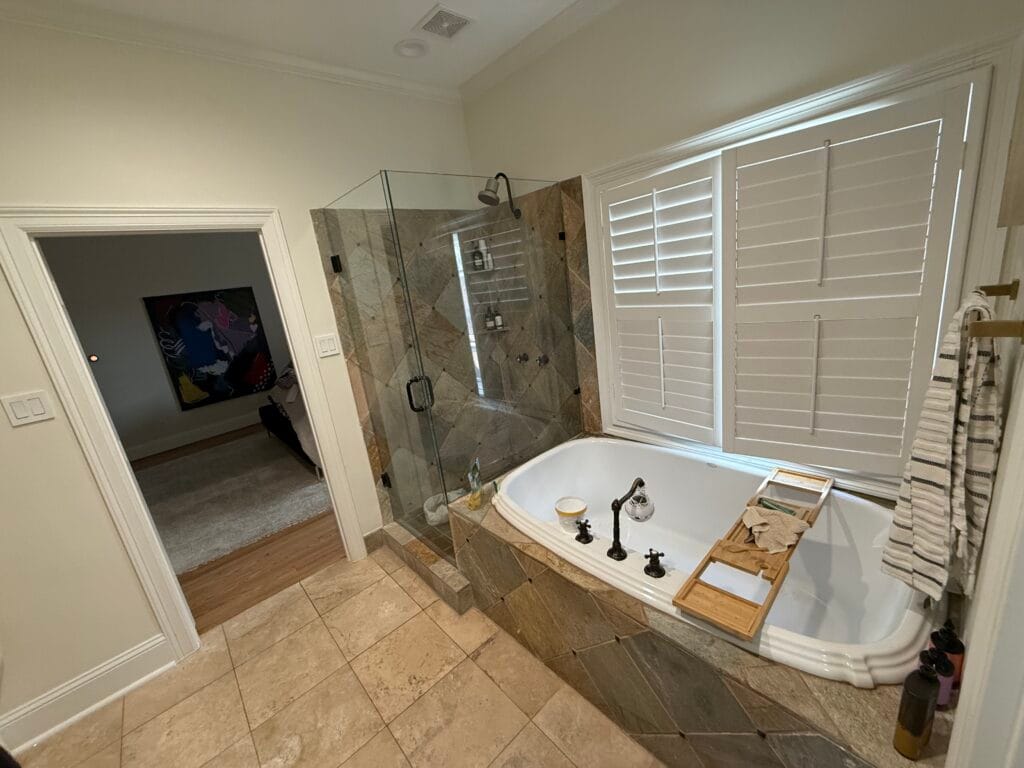
Demolition is where the project becomes visually dramatic and where the full scope of what is being replaced becomes apparent. Existing tile, flooring, vanity, fixtures, toilet, and sometimes drywall or cement board substrate all come out. In a full gut remodel, the bathroom is stripped to the studs — wall framing and subfloor only, with rough plumbing and electrical exposed.
Demolition generates significant noise and dust. Professional remodeling contractors contain the work area with plastic sheeting over doorways and take measures to limit dust migration to adjacent rooms, but some level of dust in the surrounding area is unavoidable during this phase. Plan accordingly — cover any items in adjacent rooms that are sensitive to dust, and expect the demolition days to be the loudest of the project.
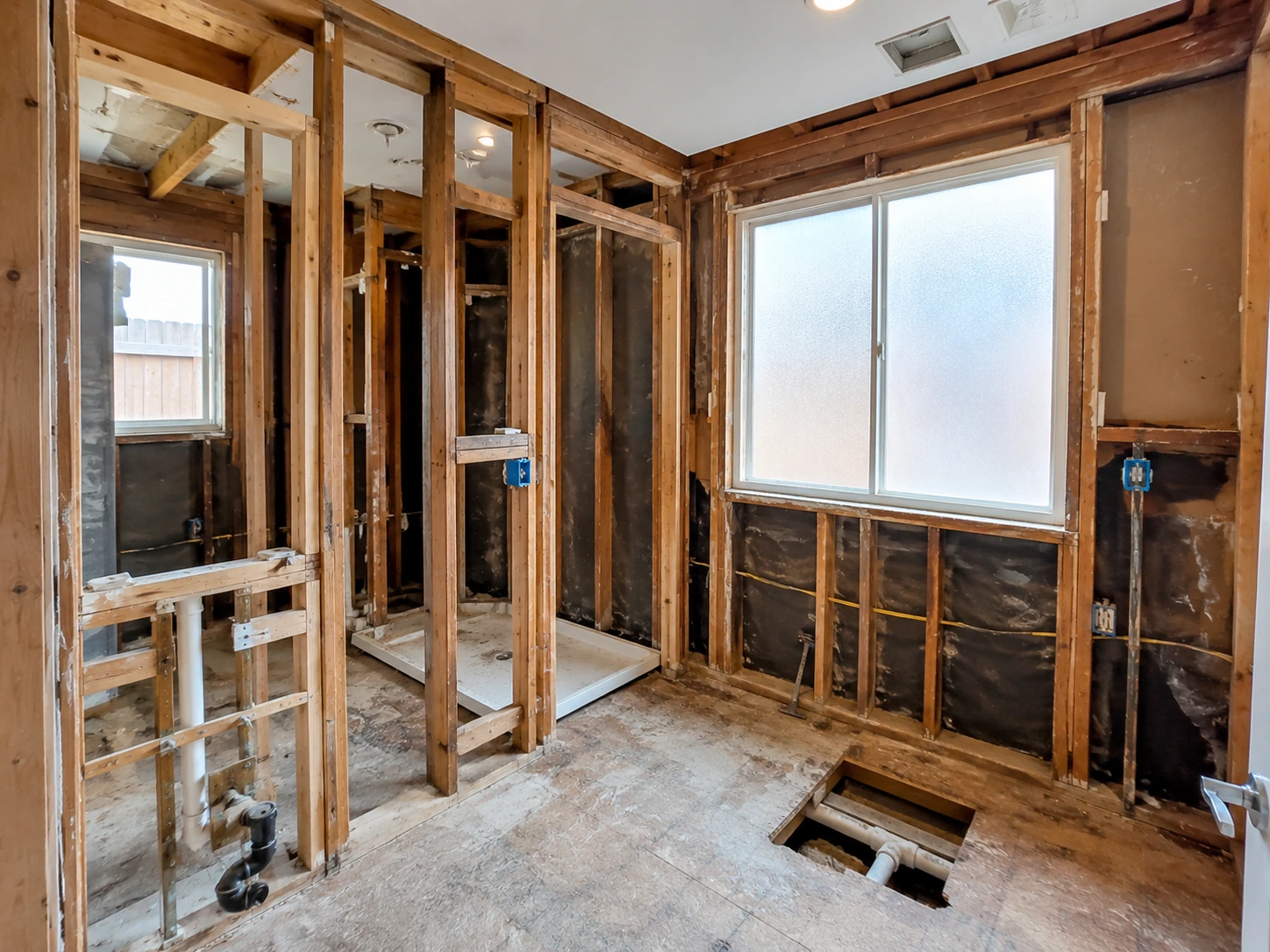
Demolition can also reveal conditions that were not visible before work began. Water damage behind shower walls, deteriorated subfloor around the toilet base, mold inside wall cavities, or plumbing that does not meet current code are all conditions that surface during demolition in North Texas homes — particularly in homes built before the mid-1990s. A professional contractor documents these findings and discusses the impact on scope and timeline with you before proceeding.
Typical duration: One to two days for a standard bathroom footprint. Larger primary bathrooms or those with extensive tile may take longer.
Phase 4 — Rough-In Work — Plumbing, Electrical, and Structural
With the bathroom stripped back to its framing, any rough-in work happens before walls are closed. If your remodel involves moving the toilet, relocating the shower drain, adding a new electrical circuit for a heated floor or exhaust fan, or making any structural modifications to walls or the ceiling, this is when that work occurs.
Rough-in work is performed by licensed plumbers and electricians working under your general contractor’s coordination. In most DFW municipalities, inspections are required after rough-in work is complete and before walls are closed. These inspections are not optional — they are the mechanism that ensures the mechanical systems behind your finished walls meet current safety codes. A contractor who skips or rushes inspections at this stage creates problems that surface during final inspections or when the home is eventually sold.
Typical duration: Two days to one week, depending on the complexity of mechanical changes involved.
Phase 5 — Waterproofing, Backer Board, and Substrate Preparation
This is one of the most important phases in a bathroom remodel and one of the least visible in the finished product — which is exactly why it matters so much. Shower walls and wet areas require a substrate that resists moisture penetration: cement board, fiber cement board, or a waterproof foam backer board product installed over the wall framing before any tile is set. Waterproofing membrane is then applied to the shower pan, the curb, and the lower portion of the shower walls to create a continuous moisture barrier that protects the framing behind the tile from any water that gets past the grout lines over time.
In North Texas, where humidity levels fluctuate significantly between summer and winter and where shower usage puts continuous moisture stress on bathroom surfaces, proper waterproofing is the difference between a shower that lasts two decades and one that develops moisture damage behind the tile within five to seven years. This phase cannot be rushed, and it should not be skipped or minimized to save cost.
Typical duration: One to three days, including waterproofing membrane cure time before tile installation begins.
Phase 6 — Tile Installation
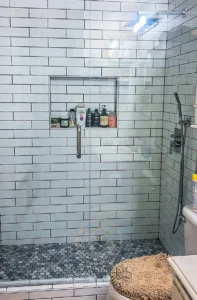
Tile installation is the phase that transforms the bathroom from a construction site into something that begins to look like the finished room. Floor tile, shower floor tile, shower wall tile, and any accent or decorative tile are all set during this phase. Large format tile, complex patterns, and shower niches add time and skill requirements to this phase — your contractor’s tile setter is one of the most important craftspeople on the project.
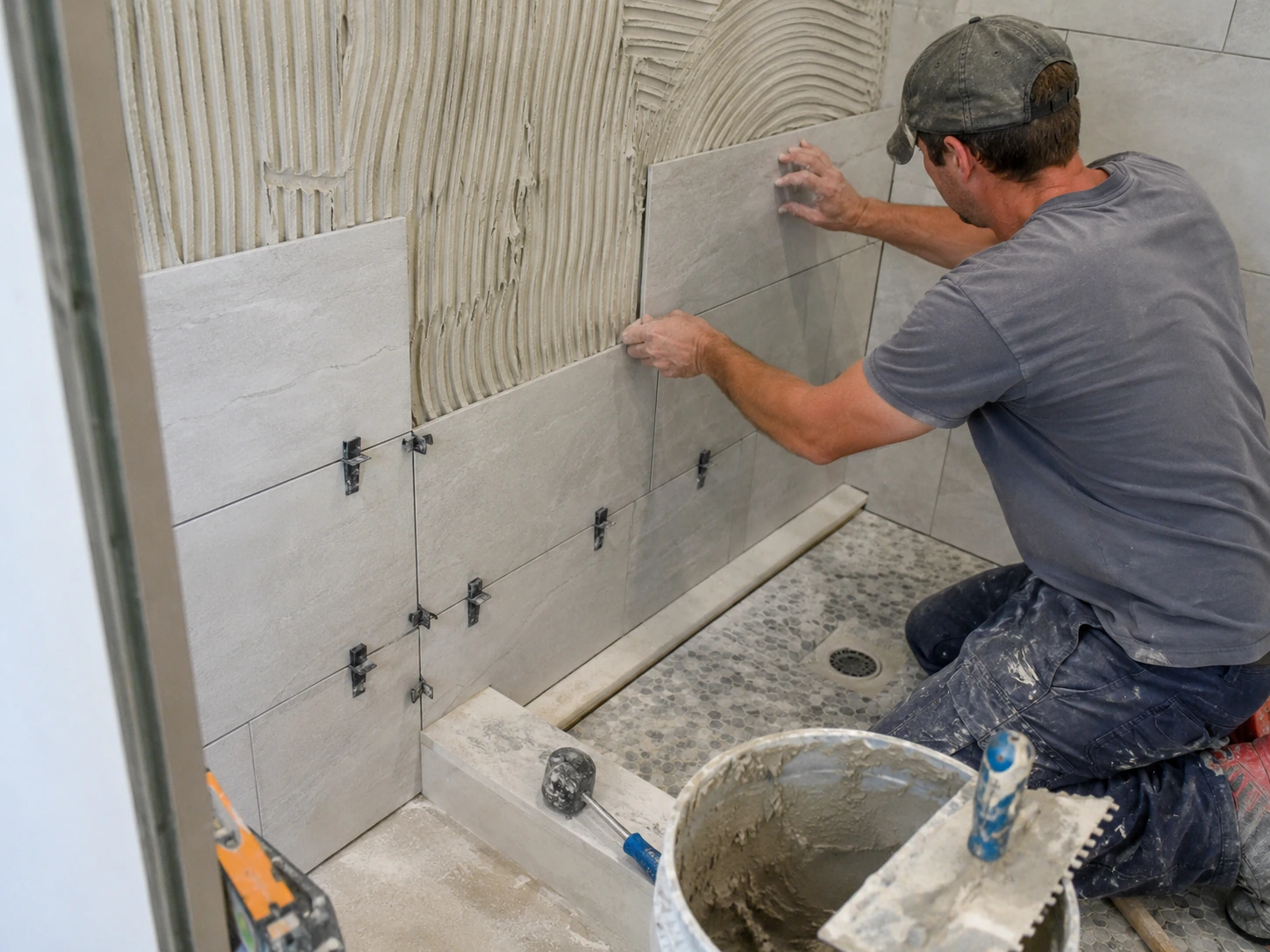
Tile installation has built-in waiting periods that are not negotiable. Thin-set mortar requires cure time before grout can be applied — typically 24 hours minimum, longer for large format tile. Grout requires cure time before it can be sealed. Silicone caulk at corners and transitions requires cure time before the shower can be used. Rushing any of these cure windows compromises the integrity of the finished installation and can lead to grout cracking, tile movement, or failed caulk joints that require repair within months of the project completing.
For homeowners in Dallas, Carrollton, Richardson, and the broader DFW area, the tile installation services offered by Azores Kitchen & Bath Remodeling cover floor tile, wall tile, shower tile, and backsplash work as part of a comprehensive bathroom renovation scope.
Typical duration: Three days to one week for tile setting, plus one to two additional days for grouting and sealing with required cure time between steps.
Phase 7 — Vanity, Fixtures, and Finish Work
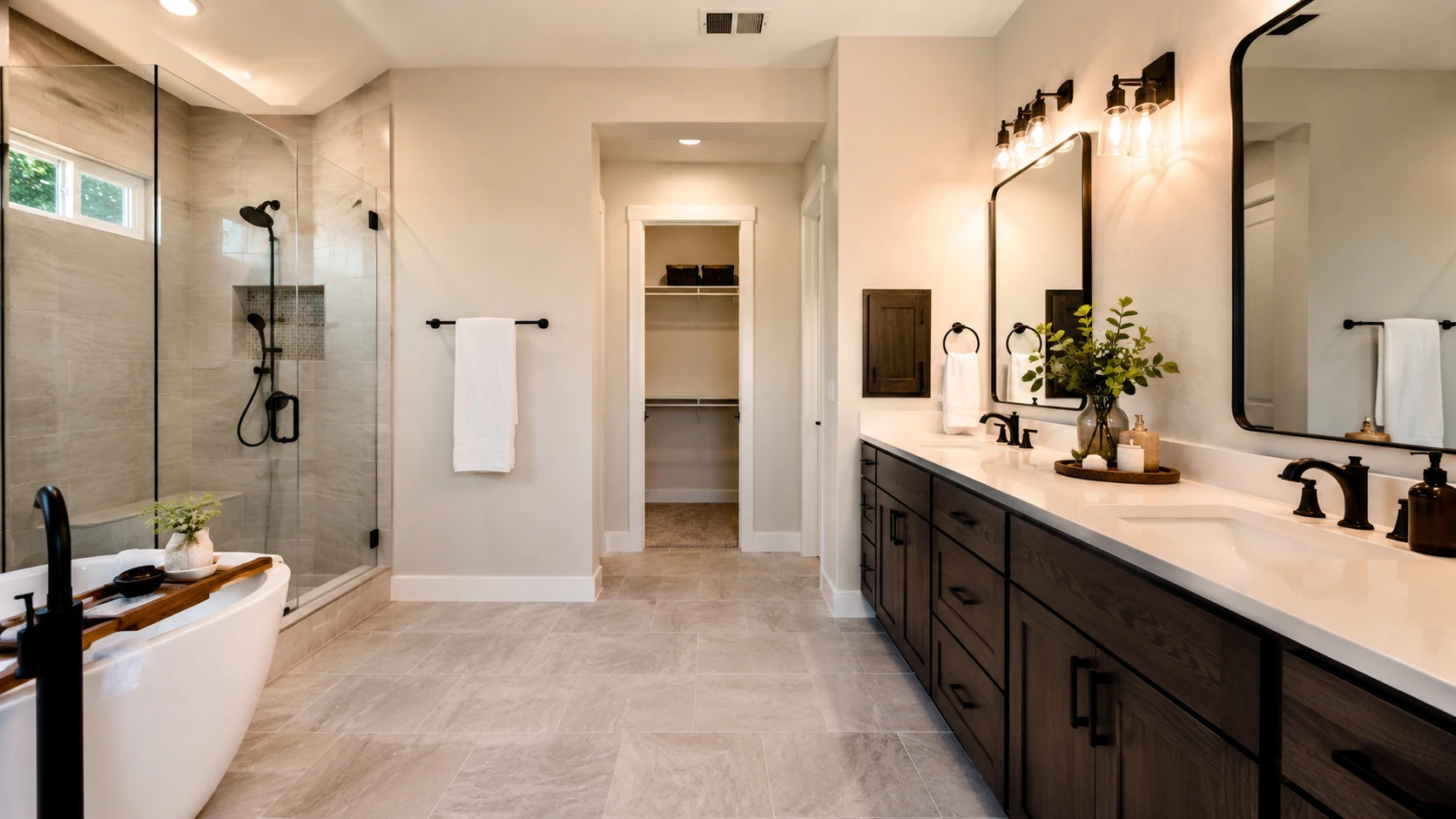
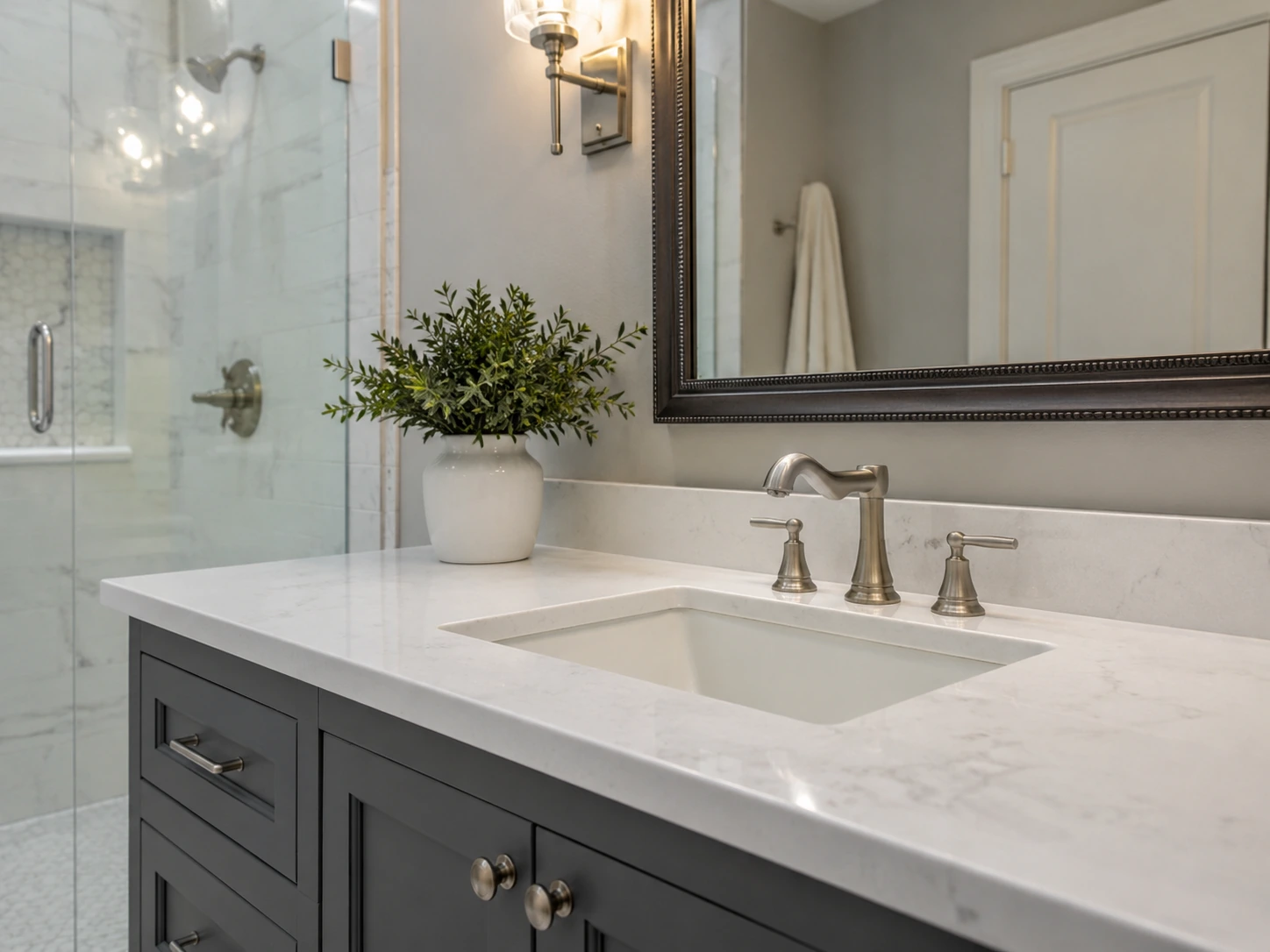
With tile complete and cured, the finish phase brings the bathroom together. The vanity is set and secured, finish plumbing connections are made at the sink and toilet, the toilet is reinstalled, light fixtures are connected, the mirror is hung, and accessories — towel bars, toilet paper holder, shower door or curtain rod — are installed. Paint touch-up happens in this phase as well, along with caulking at all transitions between tile and fixtures.
If your vanity countertop is a stone material fabricated off-site — quartz or granite — it will have been templated after the vanity base was set in an earlier phase and arrives for installation during this period. Stone countertop fabrication typically takes one to two weeks from template to delivery, so your contractor will have coordinated this timing in advance to avoid holding up the finish phase.
The finish phase is also when the shower door or enclosure is installed, if applicable. Frameless glass shower enclosures are templated and fabricated off-site like stone countertops and require advance coordination to arrive on schedule with the rest of the finish work.
Typical duration: Two to four days for finish installation work, not including fabrication lead times for stone or glass that were ordered in advance.
Phase 8 — Final Inspection, Punch List, and Walkthrough
If permits were pulled for your project, a final inspection by the relevant municipal building department is required before the project is officially closed. Once inspections are passed, your contractor conducts a final walkthrough with you to complete the punch list — the list of minor touch-ups, adjustments, and finishing details that require attention before the project is handed over.
The punch list walkthrough is your opportunity to look at every surface, every fixture, and every transition in the bathroom with a critical eye. Grout joints that need touch-up, caulk lines that need refinement, a cabinet door that needs adjustment, a fixture that needs a final tighten — all of these belong on the punch list. A professional contractor addresses the punch list as a standard part of project close-out, not as an imposition.
Typical duration: Two to four days, including inspection scheduling and punch list completion.
Realistic Total Timeline for a DFW Bathroom Remodel
| Phase | Typical Duration |
|---|---|
| Design, planning, and material selection | 2–5 weeks |
| Permits and pre-construction | 1–2 weeks |
| Demolition | 1–2 days |
| Rough-in plumbing, electrical, and structural | 2 days–1 week |
| Waterproofing and substrate preparation | 1–3 days |
| Tile installation, grouting, and sealing | 4 days–1.5 weeks |
| Vanity, fixtures, and finish work | 2–4 days |
| Final inspection, punch list, and walkthrough | 2–4 days |
| Total from demolition to completion | 4–8 weeks typical |
These ranges reflect typical full bathroom remodel projects in the DFW area. A straightforward cosmetic update — new vanity, new fixtures, and retiling without plumbing changes — will fall toward the shorter end. A full gut remodel with layout changes, new mechanical work, a reconfigured shower, and custom tile work will fall toward the longer end or beyond it depending on material lead times.
Planning Your Bathroom Remodel in North Texas
The homeowners who have the smoothest bathroom remodel experiences are the ones who invest time in the planning phase rather than rushing to a start date. Every decision made before demolition begins is a decision that does not need to be made under construction pressure — and every material ordered before the project starts is a material that will not hold up the project when it is needed.
Azores Kitchen & Bath Remodeling works with homeowners throughout Dallas, Carrollton, Richardson, and the surrounding DFW area through a structured planning and construction process for full bathroom renovations. You can explore the full scope of bathroom remodeling services available, or review options specific to your city through the Dallas bathroom remodeling page or the Carrollton bathroom remodeling page. The Richardson bathroom remodeling page covers service area details for homeowners in that part of the DFW market.
Contact Azores Kitchen & Bath Remodeling to schedule a design consultation and get a clear, honest picture of what your project will involve, how long it will take, and what to expect at every phase.
Frequently Asked Questions
How long does a full bathroom remodel take in the DFW area?
A full bathroom remodel in DFW typically takes four to eight weeks from demolition to final walkthrough, not including the planning and design phase before construction begins. Projects with extensive layout changes, custom materials, or complex tile work may take longer. The planning phase adds two to five weeks before construction starts and is one of the most important parts of the entire project.
Do I need a permit for a bathroom remodel in North Texas?
It depends on the scope of work. Bathroom remodels that involve plumbing relocation, electrical changes, or structural modifications typically require permits from the relevant city building department — whether that is Dallas, Carrollton, Richardson, or another DFW municipality. Cosmetic updates that do not affect mechanical systems may not require a permit. Your contractor should advise you on what applies to your specific project and manage the permit process on your behalf.
Why does tile installation take so long during a bathroom remodel?
Tile installation involves multiple steps with required waiting periods between them. Thin-set mortar must cure before grout can be applied, grout must cure before it can be sealed, and silicone caulk at corners and transitions must cure before the shower is used. These cure windows are not optional — rushing them leads to grout cracking, tile movement, and caulk failure that require repair shortly after the project is complete.
What is waterproofing and why does it matter in a bathroom remodel?
Waterproofing in a bathroom remodel refers to the moisture barrier system applied behind shower walls and on the shower floor before tile is set. It prevents water that penetrates grout lines from reaching the wall framing behind the tile. In North Texas, where humidity fluctuates significantly between seasons and shower surfaces face continuous moisture exposure, proper waterproofing is the primary factor in how long a tiled shower lasts before moisture damage develops behind the surface.
Will I be without a bathroom during the remodel?
Yes, the bathroom being remodeled will be completely out of service during the construction period. For households with only one bathroom, this is the most significant logistical challenge of a bathroom remodel. Some contractors can sequence the work to minimize the out-of-service window, but a full gut remodel cannot be performed with the bathroom in partial use. Access to a secondary bathroom — in the home or through a temporary arrangement — is essential for single-bathroom households planning a full renovation.
What happens if my contractor finds water damage during demolition?
Water damage discovered during demolition — behind shower walls, under flooring, or around the toilet base — needs to be fully remediated before new materials go in. A professional contractor will document the finding, explain the extent of the damage, and discuss the impact on scope and timeline before proceeding. Covering water damage with new tile or drywall without addressing the underlying cause is the source of recurring bathroom problems that are significantly more expensive to repair later.
How do I prepare for a bathroom remodel in North Texas?
The most important preparation steps are arranging reliable access to a secondary bathroom for the duration of the project, completing all material selections before your start date, removing all personal items from the bathroom being renovated, and confirming the project schedule and communication process with your contractor before work begins. Households with only one bathroom should plan the project timing carefully around any events or obligations that make alternative bathroom arrangements impractical.
What is a punch list and when does it happen?
A punch list is the final list of minor touch-ups, adjustments, and finishing details that need to be addressed before a remodeling project is officially handed over to the homeowner. It is completed during the final walkthrough at the end of the project, after all major installation work is done. Items on a punch list typically include grout touch-ups, caulk refinement, cabinet adjustments, and any fixture or finish details that did not meet the agreed standard. Completing the punch list is a normal and expected part of every professional remodeling project.