Choosing bathroom materials involves more than matching tile, countertops, and cabinet colors. The products you select must also withstand moisture, cleaning, and everyday use.
Texas has varied climates, so a bathroom in a humid coastal location may face different conditions from one in a drier inland area. Inside the home, shower steam, ventilation, air conditioning, leaks, and construction quality influence how materials perform.
For homeowners planning bathroom remodeling, the goal is to select suitable products and install them as part of a well-designed assembly. Azores Remodeling helps homeowners explore materials and design choices for practical, attractive bathroom upgrades.
Outdoor Climate Influences Indoor Conditions
Outdoor humidity can contribute to a home’s moisture load, but climate alone does not determine whether bathroom finishes will fail.
Showers and other everyday activities add moisture indoors. Without effective ventilation and moisture control, that moisture can linger or reach concealed areas. EPA guidance emphasizes controlling water sources and indoor humidity rather than simply covering affected surfaces.
This means material selection and building performance should be considered together. Even expensive finishes cannot compensate for a leaking shower or inadequate exhaust ventilation.
How Moisture Affects Bathroom Materials
Different materials respond differently to repeated wetting.
Unprotected edges, joints, penetrations, and connections often deserve as much attention as the visible surface. A vanity countertop may tolerate splashes while water entering around a sink damages the cabinet underneath.
During bath remodeling, discuss where each product will be installed:
- Inside the shower or tub enclosure.
- On a bathroom floor outside the shower.
- Around the vanity.
- On walls and ceilings.
- Near plumbing connections.
A product suitable for occasional splashes is not automatically suitable for continuous wet-area exposure.
Choosing Tile Flooring for Everyday Use
Tile flooring can be a practical bathroom option, but the individual product and installation matter.
Ask about suitability for the intended location, care requirements, and slip resistance under expected conditions. A polished surface that looks appealing in a display may not suit a wet shower floor.
Also consider tile size and layout. The shower floor needs a suitable slope toward its drain, and the selected tile must work with that design.
Professional flooring services should address the supporting surface, preparation, movement accommodation, and installation requirements—not only the tile pattern.
Tile Is Part of the Assembly
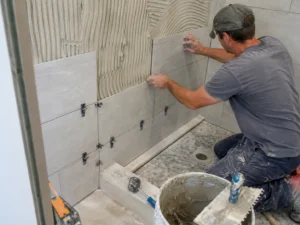
Do not assume that tile and grout alone make a shower waterproof. Discuss the water-management system beneath and around the finish.
Replacing cracked grout without investigating movement or moisture may leave the cause unresolved. Similarly, installing new tile over a damaged substrate can conceal rather than correct a problem.
Selecting Vanities and Cabinetry
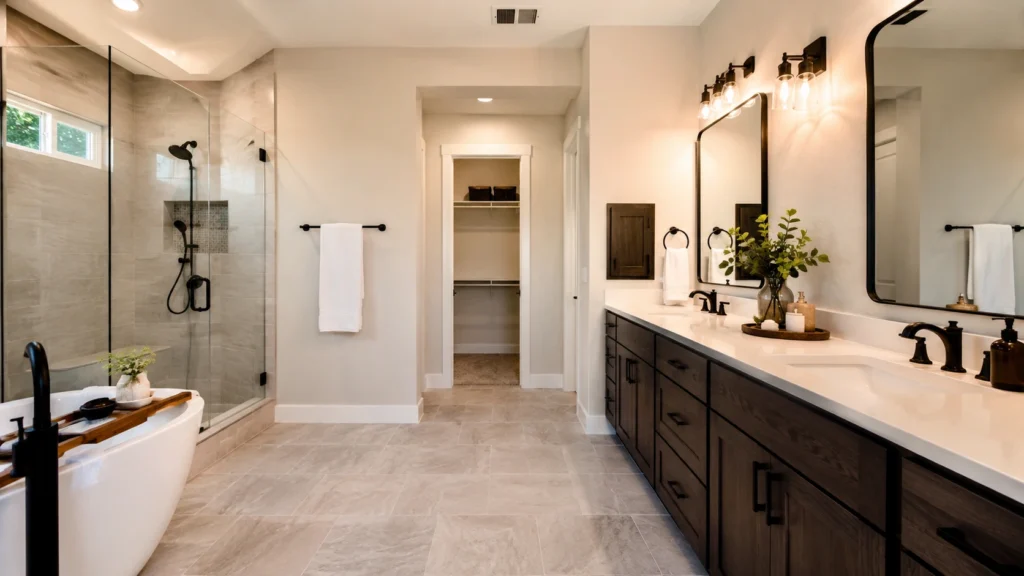
Vanities need to tolerate the conditions around sinks, plumbing, and bathroom cleaning.
Compare cabinet construction, edge protection, finish quality, and manufacturer care instructions. Labels such as “moisture-resistant” should not be interpreted as permission to leave leaks or standing water untreated.
Useful planning details include:
- Access to plumbing connections.
- Protection around sink and faucet openings.
- Storage that keeps damp items from remaining enclosed.
- Clearances for cleaning.
- A finish suited to routine care.
Choose cabinetry around how your household uses the room. A complicated finish requiring special care may be less practical than a simpler option you can maintain consistently.
Countertops: Compare Care as Well as Appearance
Bathroom countertops face water, cosmetics, cleaning products, and occasional spills.
Before selecting stone, an engineered surface, or another material, ask about sealing, stain resistance, cleaning restrictions, and installation details. Requirements vary by product.
Review the sink connection and faucet penetrations as part of the design. A durable surface does not eliminate the need for properly detailed joints and sound plumbing.
Samples are helpful, but the decision should include written product information rather than appearance alone.
Shower Installation Requires More Than Attractive Finishes
A successful shower installation depends on coordinated preparation, waterproofing, drainage, fixtures, and finish work.
Ask the contractor to explain the proposed assembly and how it will be checked before concealed work is covered.
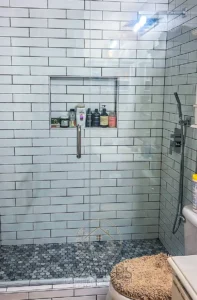
For bathroom materials inside the shower, consider maintenance access and cleaning effort alongside appearance. Numerous corners, shelves, and joints can add cleaning tasks even when they look attractive in a rendering.
Plan practical features early, including storage, controls, entry, and any seating or support needs.
Bathroom Fixtures Installation and Material Durability
Correct bathroom fixtures installation helps protect surrounding finishes.
Leaks around supply connections, drains, or fixtures can affect cabinets, flooring, and concealed construction. These problems should be corrected at their source rather than treated as evidence that every surrounding material is unsuitable.
Select fixtures with appropriate installation requirements, accessible service parts, and care instructions you can follow.
Ask how fixture dimensions and connections affect the vanity, countertop, shower layout, and project schedule.
Ventilation Supports Your Material Choices
Bathroom upgrades should include an assessment of moisture removal.
EPA recommends bathroom ventilation and drying damp surfaces to help control moisture. Fans should exhaust appropriately outdoors rather than release bathroom moisture into another enclosed area. epa.gov
Ask about fan placement, duct routing, and operation. A timer or suitable humidity control may help support consistent use.
Opening a window is not always an effective drying strategy when outdoor air is humid. The approach should suit the actual conditions in the home.
Material Selection Checklist
| Component | What to evaluate |
|---|---|
| Bathroom floor | Wet-use suitability, slip resistance, substrate, and care |
| Shower surfaces | Compatibility with the complete waterproofing and drainage assembly |
| Vanity | Construction, protected edges, finish, and plumbing access |
| Countertop | Cleaning, sealing requirements, sink connections, and penetrations |
| Wall and ceiling finishes | Suitability for the location and moisture conditions |
| Fixtures | Installation requirements, service access, and maintenance |
| Sealants and joints | Compatibility, intended movement, and future replacement needs |
There is no single material that is best for every bathroom. Compare complete systems and maintenance requirements.
How Material Choices Affect Bathroom Remodel Cost
Bathroom remodel cost depends on more than the purchase price of the visible finishes.
Preparation, demolition, plumbing changes, ventilation, substrate repairs, waterproofing, installation labor, and finish restoration all affect the scope.
A lower-priced tile can still involve substantial preparation. A premium vanity may require layout or plumbing adjustments. Hidden moisture damage can add work that was not visible during the initial consultation.
Ask for an estimate that separates essential construction from optional features. Preserve the budget for the work that supports performance before committing to decorative upgrades.
Azores Remodeling’s planning information identifies room size, materials, plumbing changes, and custom features as factors affecting remodeling cost.
Applying These Lessons to Little Rock Homes
Homeowners comparing remodeling contractors in Little Rock, Arkansas, can use the same material-selection questions while evaluating their own property’s conditions.
Texas and Arkansas should not be treated as having identical climates. The practical approach is to assess local exposure, indoor humidity, ventilation, existing construction, and daily use.
Ask a prospective contractor how those findings affect the proposed bathroom materials. Confirm service availability for your address and request a clearly defined project scope.
Plan Bathroom Upgrades With Azores Remodeling
Durable bathroom materials work best when the design, installation, and maintenance plan support them.
Azores Remodeling offers material-selection guidance and bathroom remodeling options, including tile, vanities, showers, and fixtures. Review the company’s material-selection services or bathroom remodeling information to begin discussing your project.
Bring photographs, your main concerns, and a list of desired improvements so the conversation starts with what your bathroom needs.
Contact Details:
Azores Kitchen & Bath Remodeling · 16913 Highway 10, Little Rock, AR 72223 · 501-443-3938
Frequently Asked Questions
Does Texas humidity damage all bathroom materials?
No. Performance depends on the product, installation, ventilation, maintenance, and exposure. Persistent dampness deserves attention regardless of the material.
What bathroom flooring should I choose?
Choose a product suited to the location, expected wet conditions, cleaning routine, and supporting assembly. Review slip resistance and installation requirements.
Is tile enough to waterproof a shower?
No. The shower needs an appropriate water-management assembly. Tile is the finish layer rather than a substitute for the complete system.
Can moisture-resistant cabinets withstand a plumbing leak?
Do not assume so. Repair leaks promptly and follow the cabinet manufacturer’s instructions. Moisture resistance does not mean unlimited water tolerance.
Should ventilation be included in bathroom remodeling?
Yes. Discuss the existing fan, exhaust route, operation, and any moisture concerns as part of planning.
Do expensive bathroom materials always last longer?
Not necessarily. Suitability, preparation, workmanship, and maintenance can matter as much as price.
How can I control bathroom remodel cost?
Define the scope early, finalize key selections, compare equivalent estimates, and distinguish essential construction from optional features.
What should I ask remodeling contractors in Little Rock, Arkansas?
Ask how they evaluate moisture, prepare substrates, specify shower waterproofing, coordinate fixtures, and document materials and exclusions.