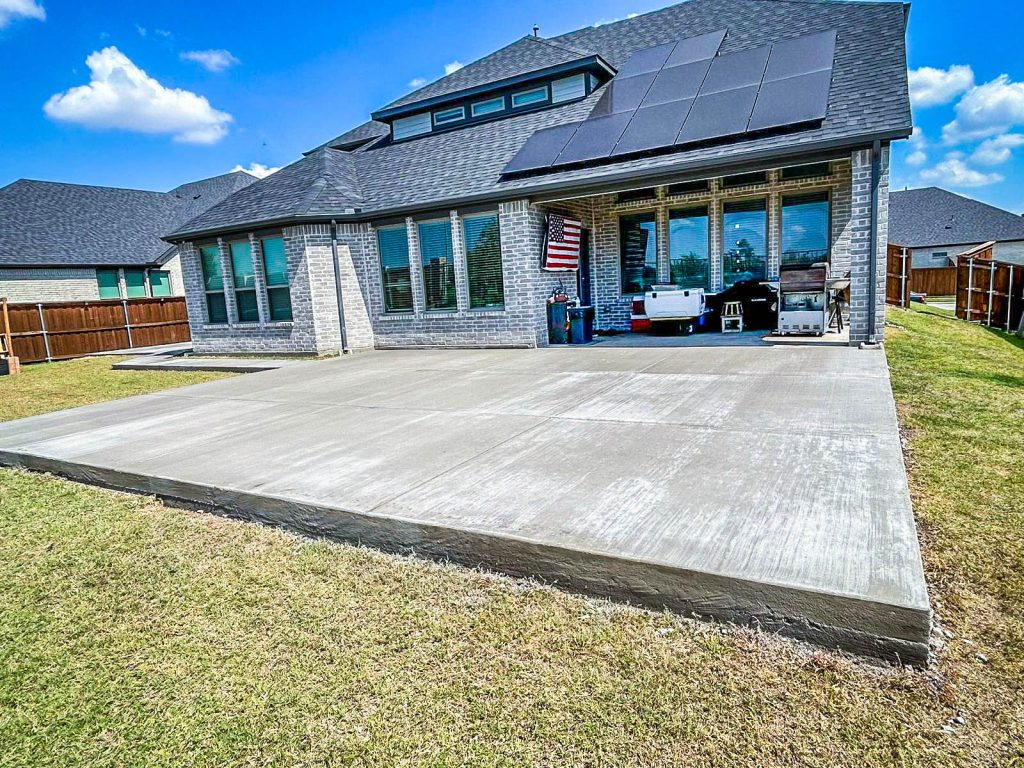
A new patio or walkway can change how you use your yard, but choosing the surface involves more than appearance. Concrete pavers and stamped concrete can both create attractive outdoor spaces, with different installation methods and repair considerations.
For homeowners in Dallas, TX, the better choice depends on the project’s use, site conditions, budget, and maintenance preferences. Neither option can compensate for poor preparation or an unresolved drainage problem.
Azores Remodeling helps homeowners plan coordinated improvements. Here is how to compare these two surfaces before investing in your next outdoor project.
What Are Concrete Pavers?
Concrete pavers are individual manufactured units arranged to create a finished pavement. Conventional interlocking systems typically include a prepared base, bedding material, joint material, and edge restraints.
The individual pieces create a modular surface. Depending on the system and condition, sections can be lifted and reinstated when repairs or access are needed.
Pavers come in different dimensions, colors, textures, and patterns. Confirm that the selected product and pavement design suit the intended use, particularly when vehicles will travel over the surface.
What Is Stamped Concrete?
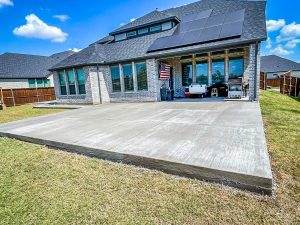
Stamped concrete is poured concrete textured with a pattern before it hardens. The finished surface can resemble stone, brick, wood, or other materials.
Color, pattern, and finishing treatments create the decorative appearance. Unlike pavers, the stamped pattern does not divide the slab into individual removable units.
A stamped slab still needs appropriate concrete construction practices, including preparation, joint planning, curing, and a finish suited to the application.
Stamped Concrete vs. Concrete Pavers at a Glance
| Consideration | Concrete pavers | Stamped concrete |
|---|---|---|
| Construction | Individual units installed as a pavement system | Poured slab with a decorative surface |
| Appearance | Patterns created through unit arrangement | Patterns impressed into concrete |
| Repairs | Units may be lifted, replaced, or reset | Repairs may remain visible in the pattern or color |
| Joints | Joints between units are part of the system | Planned slab joints remain necessary |
| Maintenance | Cleaning and joint-material care | Cleaning and finish or sealer care as specified |
| Drainage | Conventional and permeable systems differ | Surface slope and discharge need planning |
| Best comparison | Complete installed pavement specification | Complete slab and decorative-finish specification |
Review physical samples and examples of completed work before selecting either surface.
Which Offers More Design Flexibility?
Concrete Pavers
Concrete pavers allow borders, bands, and changes in laying pattern. They can help define separate parts of an outdoor living area without changing materials entirely.
For paver walkways, consider how curves, steps, and transitions will be handled. A pattern that looks attractive across a large patio may need careful adjustments along a narrow path.
Ask about color variation and ordering extra matching units for possible future repairs.
Stamped Concrete
Stamped concrete offers a patterned surface with fewer individual piece edges. It can work well when you prefer a decorative slab with a coordinated color treatment.
Discuss where the pattern begins and ends, how it meets nearby surfaces, and how planned joints will fit the design.
Color samples provide guidance rather than a promise of an identical result under every lighting and curing condition. Review the expected variation before work begins.
What About Cracking and Settlement?
Concrete can crack. Appropriate preparation, curing, and jointing help manage that risk, but they cannot guarantee a crack-free slab. The National Ready Mixed Concrete Association addresses these issues in its concrete guidance.
Concrete pavers also depend on preparation. A modular surface may allow localized resetting, but inadequate support or drainage can still lead to settlement and unevenness.
If the existing area has recurring movement, do not assume a new finish alone will solve it. Ask whether the site needs further assessment before concrete construction or pavement installation proceeds.
Which Surface Is Easier to Repair?
Concrete pavers offer the practical advantage of individual-unit access. A damaged unit may be replaceable, and a settled area may be lifted and rebuilt.
However, repair can involve more than rearranging the top layer. The underlying cause needs attention, and older units may be difficult to match exactly.
Stamped concrete repairs can interrupt the surface’s visual continuity. Patches may differ in color, texture, or pattern, and larger damage may require a broader repair scope.
Discuss likely repair methods before choosing a surface, particularly if future underground access may be needed.
Compare Maintenance Requirements
Neither option is maintenance-free.
For pavers, plan cleaning and checks of joint material, edge restraints, and surface levels. Joint stabilization or sealing may be appropriate depending on the product and conditions.
For stamped concrete, discuss cleaning, finish care, and whether resealing is required. The correct interval depends on the specified product, exposure, and wear.
Follow product instructions rather than applying the same cleaner or sealer to every surface. Also review how the chosen finish performs when wet; texture or a matte appearance alone does not guarantee slip resistance.
Does Water Drain Through Concrete Pavers?
Not all paver installations are permeable.
A conventional system may shed much of its runoff across the surface. A permeable pavement requires suitable units or joint openings and an appropriately designed underlying system.
Stamped concrete also needs a planned runoff route. For either option, review finished elevations, slope, adjacent doorways, and discharge locations.
Do not choose pavers solely on the assumption that gaps between pieces will resolve yard drainage problems.
Which Costs Less in Dallas?
There is no reliable universal winner on price. Project size, excavation, removal, access, base requirements, pattern, materials, and finishing work all influence the total.
When comparing concrete services in Dallas, request proposals for the same area and intended use. Include preparation, drainage work, edge details, disposal, and cleanup in the comparison.
A basic stamped finish and an elaborate paver layout are not equivalent scopes. Likewise, a specialty decorative slab may cost differently from a straightforward paver installation.
Compare long-term maintenance and repair considerations alongside the initial price.
Choose the Surface Around Your Outdoor Living Plans
Think about how the space connects to seating, cooking, landscaping, and entrances.
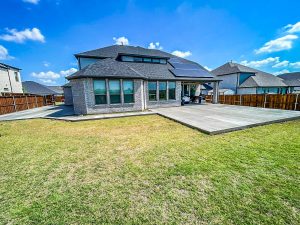
For outdoor living, consider furniture placement, clear walking routes, surface temperatures, shade, and cleaning access. Plan transitions between surfaces so the finished space works as a whole.
If you are arranging home remodeling services at the same time, coordinate exterior elevations and access with the interior work. Sequencing can help avoid damaging a newly finished patio during later construction.
Discuss Outdoor Remodeling Services With Azores Remodeling
Choose concrete pavers when modular design and potential localized repairs are important priorities. Consider stamped concrete when you prefer a patterned poured surface and understand its finish and repair requirements.
The strongest result comes from matching the material to the site and installing the complete system correctly.
Contact Azores Remodeling to discuss outdoor remodeling services, concrete construction, and your plans for patios or paver walkways. Ask the team to confirm the available material options and scope for your Dallas property.
For concrete services in Dallas, call 469-743-8193 or visit Azores Remodeling’s Concrete and Patio page to request a consultation.