
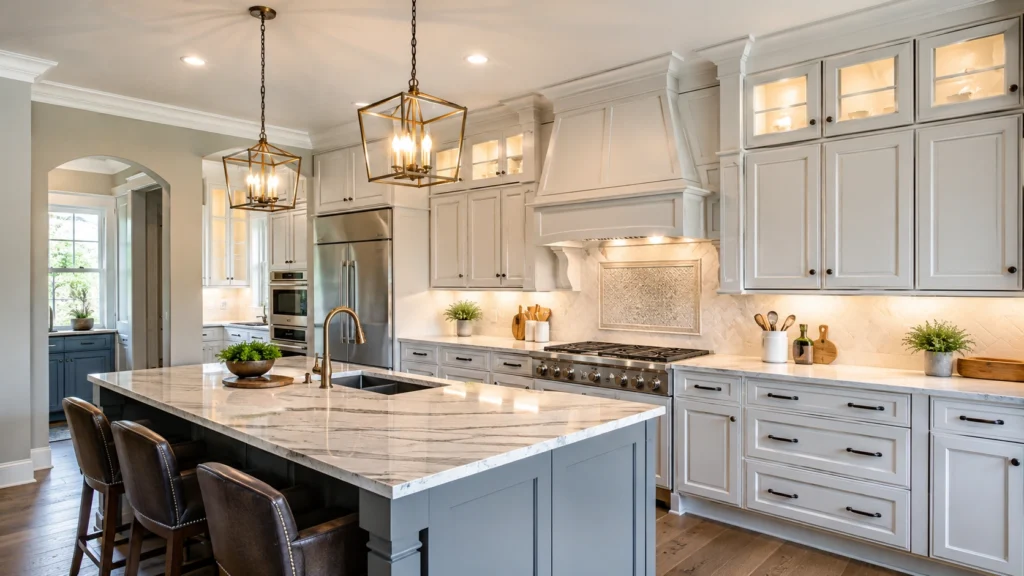
Semi-Custom vs. Custom Cabinets — What DFW Homeowners Need to Know
Cabinets are the single largest line item in most kitchen remodels, and the decision between semi-custom and custom options shapes nearly everything else about the project — budget, timeline, design flexibility, and how well the finished kitchen actually fits the way you live. For DFW homeowners working through a kitchen remodel, understanding what separates these two categories before you start selecting finishes can save you from either overpaying for flexibility you do not need or underbuying for a kitchen that does not quite work the way you hoped.
Semi-custom cabinets are built from standardized box sizes with a range of modification options — extra width increments, finish choices, and accessory add-ons — and typically have shorter lead times and lower costs than fully custom cabinetry. Custom cabinets are built to the exact specifications of your kitchen with no size constraints, offering complete design flexibility at a higher price point and longer lead time. The right choice depends on how unique your kitchen’s layout and storage needs actually are.
Understanding the Three Cabinet Categories
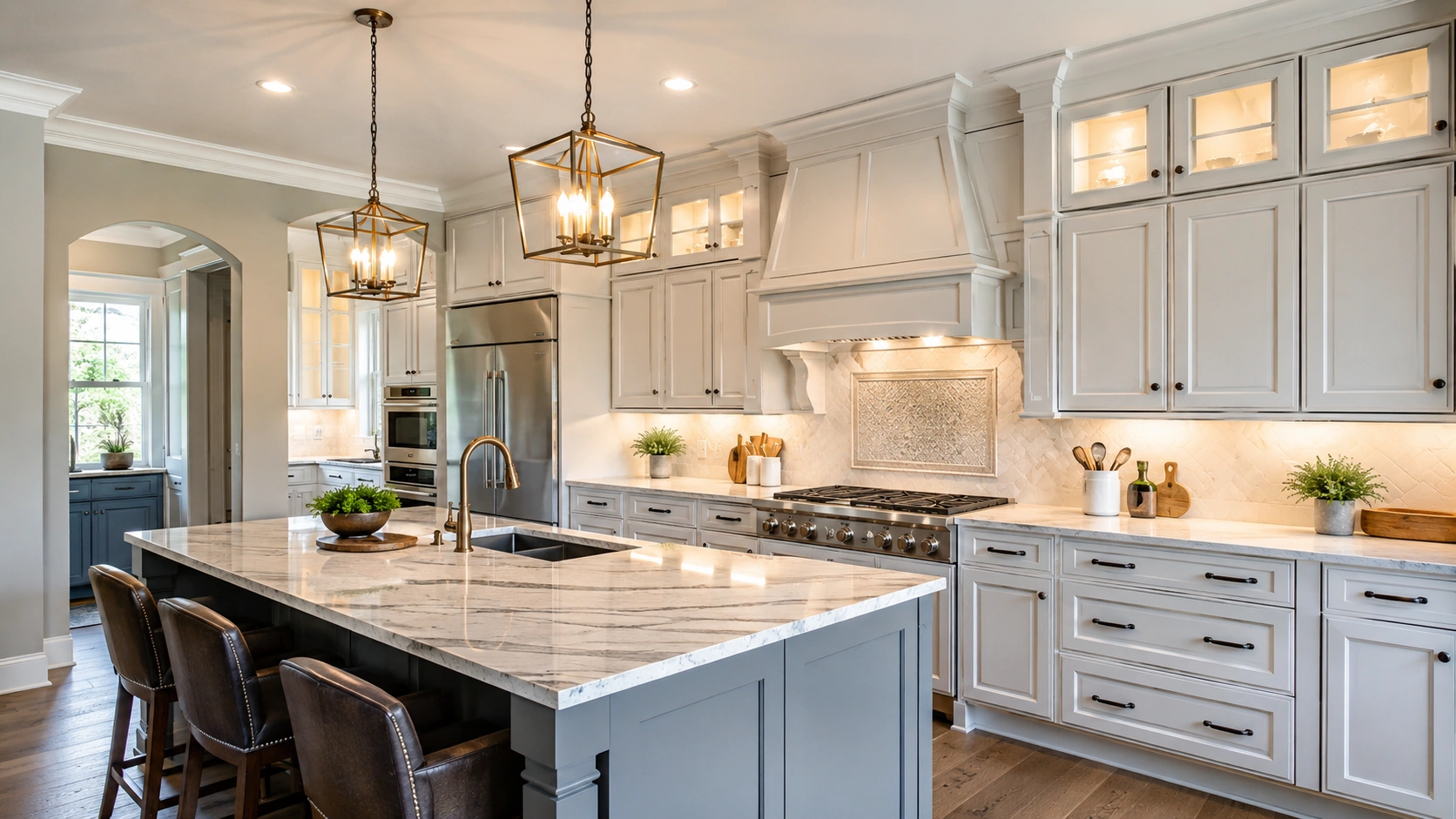
Before comparing semi-custom and custom directly, it helps to understand where they sit relative to the third option most homeowners encounter: stock cabinetry. Stock cabinets come in fixed, standardized sizes — typically in three-inch width increments — with limited finish and configuration options, and are manufactured in advance rather than built to order. They are the fastest and least expensive option but offer almost no flexibility for unusual layouts or specific storage needs.
Semi-custom cabinets sit in the middle of the spectrum. They are built on standardized cabinet box platforms but offer a meaningfully wider range of width increments, depth options, height adjustments, and accessory configurations than stock cabinetry. Most semi-custom lines also offer a substantial range of door styles, finishes, and hardware options, allowing for real design customization without the cost of building every box from scratch.
Custom cabinets are built entirely to the specifications of your kitchen, with no constraints from a manufacturer’s standardized sizing system. Every box, every filler piece, and every configuration is designed and constructed specifically for your space. This is the option with the fewest limitations and the highest price point.
Construction Quality — What Actually Differs
One of the most persistent misconceptions among homeowners is that custom automatically means better-built. This is not necessarily true. Construction quality is a separate variable from customization level, and high-quality semi-custom lines can match or exceed the build quality of lower-tier custom shops. What differs reliably between categories is the range of construction options available, not a guaranteed quality tier.
Box construction — plywood vs. particleboard
Cabinet boxes are constructed from either plywood or particleboard, sometimes called engineered wood or MDF in different contexts. Plywood boxes are more dimensionally stable, hold screws and fasteners more reliably over the life of the cabinet, and resist moisture and humidity swings better than particleboard. Higher-end semi-custom lines frequently use plywood box construction, and reputable custom shops do as well. The presence of plywood construction is a more reliable quality indicator than whether the cabinet is technically classified as semi-custom or custom.
Drawer construction and slide hardware
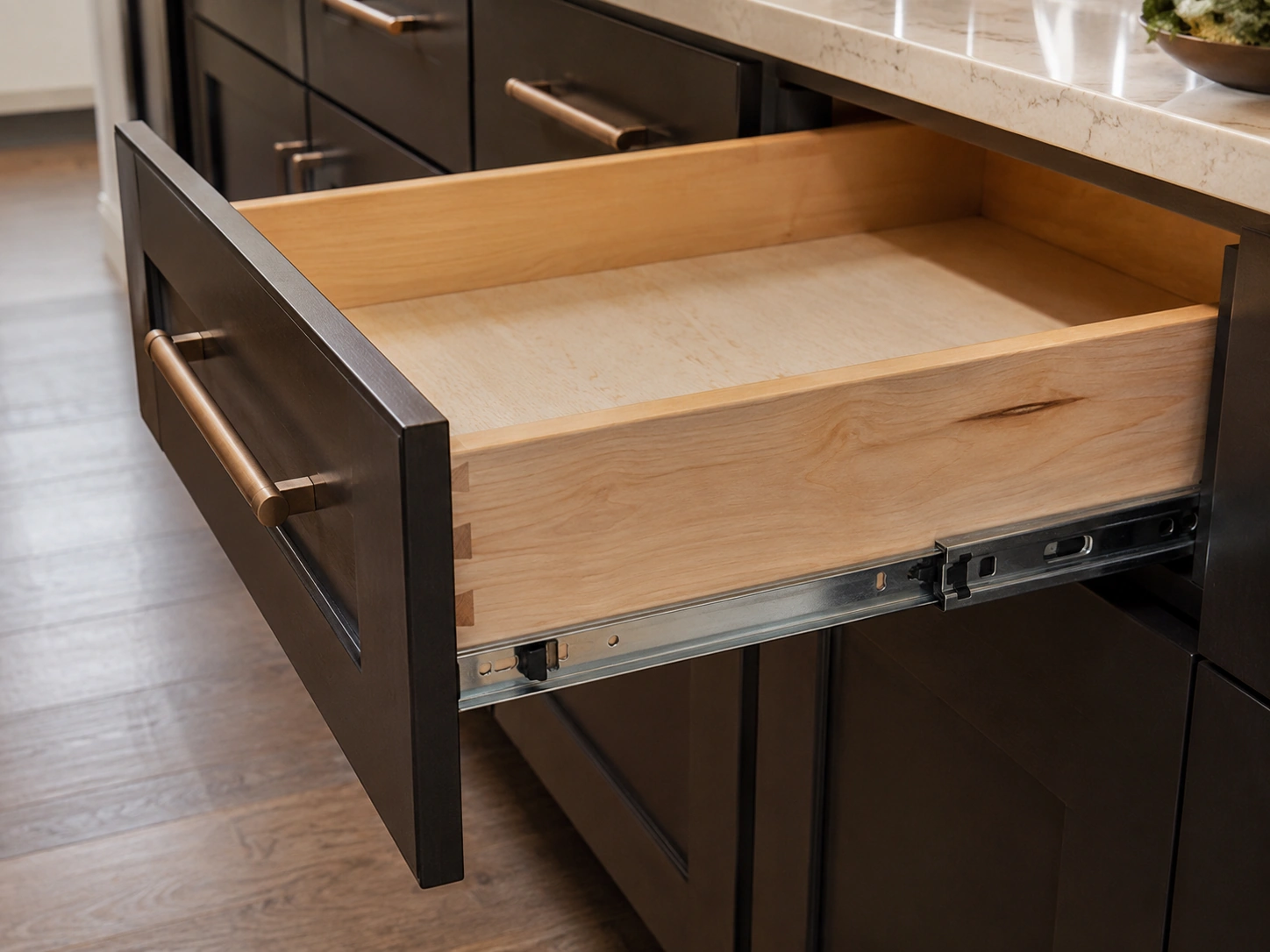
Drawer box construction — dovetail joinery versus stapled or doweled construction — and the quality of the drawer slide hardware are two of the most telling indicators of overall cabinet quality. Soft-close, full-extension drawer slides rated for substantial weight capacity are a feature found in quality cabinetry across both semi-custom and custom categories. Lower-tier options in either category may use lighter-duty slides that wear out faster and do not extend fully, limiting usable drawer space.
Door and frame construction — face-frame vs. frameless
Cabinets are built using either face-frame construction, where a solid wood frame surrounds the front of the cabinet box, or frameless construction, sometimes called European-style, where the door attaches directly to the box edge. Face-frame construction is more traditional in appearance and slightly reduces usable interior cabinet width. Frameless construction maximizes interior storage space and creates a cleaner, more contemporary appearance. Both semi-custom and custom cabinet lines offer both construction styles — this is a design decision independent of the custom versus semi-custom choice.
Where Custom Cabinets Genuinely Outperform Semi-Custom
There are specific situations where custom cabinetry provides real, measurable advantages that semi-custom options cannot replicate, regardless of quality tier.
Unusual room dimensions and architectural features
Kitchens with angled walls, non-standard ceiling heights, structural columns, or irregular footprints — common in older DFW homes that have been added onto or renovated multiple times over the decades — often cannot be fully served by semi-custom sizing increments. A wall that is 94 inches long does not divide cleanly into standard cabinet widths without filler pieces that waste usable space. Custom cabinetry can be built to the exact dimension, eliminating wasted space and filler panels that semi-custom installations sometimes require.
Highly specific storage and organizational needs
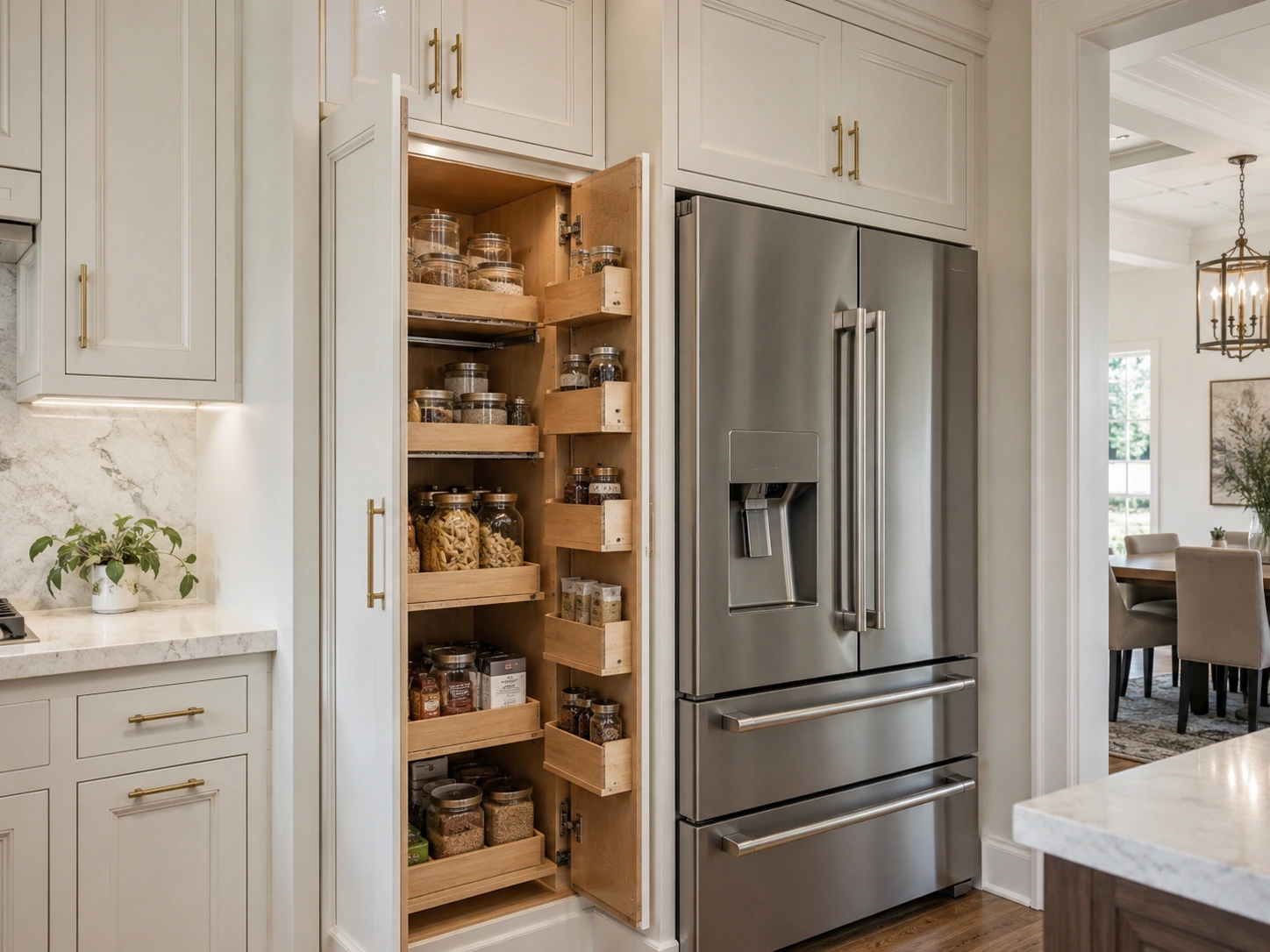
Households with specific storage requirements — a large stand mixer that needs a dedicated lift cabinet, an extensive spice collection that needs a custom pull-out configuration, or specialty cookware that requires non-standard drawer depths — benefit from custom cabinetry’s ability to design storage around the exact items rather than adapting standardized configurations to fit. Corner cabinet solutions, in particular, are an area where custom design can solve space challenges that standardized configurations handle less elegantly.
Built-in cabinetry around appliances or architectural elements
Cabinetry that needs to integrate seamlessly around a built-in refrigerator, wrap around a window, or incorporate a custom range hood enclosure benefits from a fully custom approach. Semi-custom lines can often accommodate these situations with the right accessory and filler options, but truly seamless integration — no visible gaps, no awkward transitions — is where custom construction has a genuine advantage.
Where Semi-Custom Cabinets Make the Most Practical Sense
For the majority of DFW kitchen remodels, semi-custom cabinetry provides the design flexibility homeowners actually need without the cost premium and extended lead time of fully custom construction.
Standard or near-standard room dimensions
If your kitchen’s wall lengths fall reasonably close to standard cabinet width increments, semi-custom lines can typically achieve a layout that looks intentional and custom-fit without requiring the bespoke construction process. The width increment flexibility in quality semi-custom lines — often available in one-inch or three-inch increments rather than the larger jumps found in stock cabinetry — closes most of the gap that used to separate semi-custom from custom in terms of fit precision.
Budget and timeline considerations
Semi-custom cabinets typically carry meaningfully lower costs than fully custom cabinetry for a comparable kitchen size, and lead times are generally shorter — often four to eight weeks compared to eight to twelve weeks or more for custom shops with high demand. For homeowners working within a defined renovation budget or timeline, semi-custom often delivers the best balance of design quality, fit precision, and project efficiency.
Wide style and finish selection without the custom premium
Many semi-custom lines now offer door style, wood species, paint color, and stain finish selections that rival what custom shops provide. The aesthetic outcome — the visual result a guest sees in a finished kitchen — is often indistinguishable between a well-selected semi-custom installation and a custom one, particularly once cabinets are installed, hardware is added, and the kitchen is styled as a complete space.
Cost and Timeline — What to Actually Expect
Pricing for both semi-custom and custom cabinetry varies significantly based on door style, wood species, finish, hardware, and the specific manufacturer or shop involved, so this guide will not state specific dollar figures that could be misleading without a defined scope. What is consistent across the DFW market is the general relationship: custom cabinetry carries a meaningful cost premium over semi-custom for a comparable kitchen footprint, and that premium increases with the complexity of the layout and the number of custom storage solutions involved.
Lead time follows a similar pattern. Semi-custom orders are typically ready for delivery and installation within four to eight weeks of finalizing the order, depending on the manufacturer and current order volume. Custom cabinet shops frequently require eight to twelve weeks or longer, particularly for shops with a strong local reputation in the DFW market that carry a backlog of committed projects. If your remodel timeline is a significant factor, lead time differences between the two categories should weigh heavily in your decision.
How to Decide Which Option Is Right for Your Kitchen
The decision comes down to an honest assessment of your kitchen’s specific challenges. If your kitchen has standard dimensions, conventional storage needs, and a layout that semi-custom width increments and accessory options can serve well, semi-custom cabinetry is very likely the more practical and cost-effective choice. If your kitchen has unusual architectural features, highly specific storage requirements that standardized configurations cannot accommodate, or you are integrating cabinetry tightly around built-in appliances or structural elements, custom cabinetry’s flexibility justifies the additional cost and lead time.
A design consultation with an experienced kitchen remodeling contractor is the most reliable way to get an honest answer specific to your space. A contractor who has installed both categories extensively in DFW kitchens can evaluate your room’s dimensions and your household’s storage needs and tell you directly whether semi-custom will serve you well or whether your kitchen’s specific challenges justify the custom investment.

Azores Kitchen & Bath Remodeling works with homeowners throughout Dallas, Frisco, McKinney, and the broader DFW area to evaluate cabinet options as part of a full kitchen remodeling project. The renderings and material selection process includes reviewing cabinet options specific to your kitchen’s layout before any order is placed. You can also explore cabinet installation services in your city through the Dallas cabinet installation page, the Frisco cabinet installation page, or the McKinney cabinet installation page.
For homeowners researching cabinet construction terminology and industry standards more broadly, the National Kitchen and Bath Association publishes resources covering cabinet construction methods and planning guidelines.
Contact Azores Kitchen & Bath Remodeling to schedule a design consultation and get a direct, honest recommendation based on your kitchen’s layout and your household’s storage needs.
Frequently Asked Questions
What is the main difference between semi-custom and custom cabinets?
Semi-custom cabinets are built on standardized box platforms with a range of width, depth, and accessory options, while custom cabinets are built entirely to the specific dimensions and requirements of your kitchen with no sizing constraints. Semi-custom typically costs less and has a shorter lead time, while custom offers complete design flexibility at a higher price and longer wait.
Are custom cabinets always better quality than semi-custom?
Not necessarily. Construction quality — plywood box construction, soft-close drawer slides, dovetail joinery — is a separate variable from customization level. High-quality semi-custom lines can match or exceed the build quality of lower-tier custom shops. The decision between the two should be based on your kitchen’s specific layout and storage needs rather than an assumption that custom automatically means better-built.
How much longer does it take to get custom cabinets compared to semi-custom?
Semi-custom cabinets are typically ready for installation within four to eight weeks of finalizing the order, while custom cabinet shops often require eight to twelve weeks or longer, particularly shops with strong reputations and existing project backlogs in the DFW market. If your remodel has a defined timeline, this difference is worth factoring into your decision early in the planning process.
When does it make sense to choose custom cabinets over semi-custom?
Custom cabinets make the most sense when your kitchen has unusual architectural features such as angled walls or non-standard dimensions, when you have highly specific storage needs that standardized configurations cannot serve well, or when cabinetry needs to integrate seamlessly around built-in appliances or structural elements. For kitchens with relatively standard dimensions and conventional storage needs, semi-custom typically achieves a comparable result at a lower cost.
Can semi-custom cabinets fit unusual kitchen layouts?
Many semi-custom lines offer width increments as fine as one inch, along with a range of filler panels and accessory configurations that can accommodate moderately unusual layouts. However, kitchens with significantly irregular dimensions, angled walls, or unique architectural constraints may still require custom construction to avoid wasted space or awkward filler panels.
What should I look for to evaluate cabinet quality regardless of category?
Look at the box construction material — plywood holds up better than particleboard over time — the drawer slide hardware quality and whether it is soft-close and full-extension, and the joinery method used in drawer box construction. These construction details matter more for long-term durability than whether the cabinet is classified as semi-custom or custom.
Do semi-custom cabinets offer enough style and finish options for a high-end kitchen design?
Many semi-custom lines now offer an extensive range of door styles, wood species, paint colors, and stain finishes that rival custom shop offerings. The finished visual result in an installed kitchen is often very difficult to distinguish between a well-selected semi-custom installation and a fully custom one, particularly once the kitchen is complete with hardware and styling.
Should I get quotes for both semi-custom and custom before deciding?
Yes, if your kitchen’s layout and storage needs are not clearly in one category or the other, getting input on both options from your remodeling contractor is a worthwhile step. A contractor experienced with both categories in DFW kitchens can give you a realistic comparison specific to your space rather than a generic recommendation.